
Catching up over a cup of coffee is my favourite part of the day. Whether you love one of the many types of lattes, a long black, or a trendy cold drip coffee, there’s never been a better time to truly gain an appreciation for your morning heart starter than right now. Here is a guide to 15 of the different types of espresso drinks you’ll find around the world.
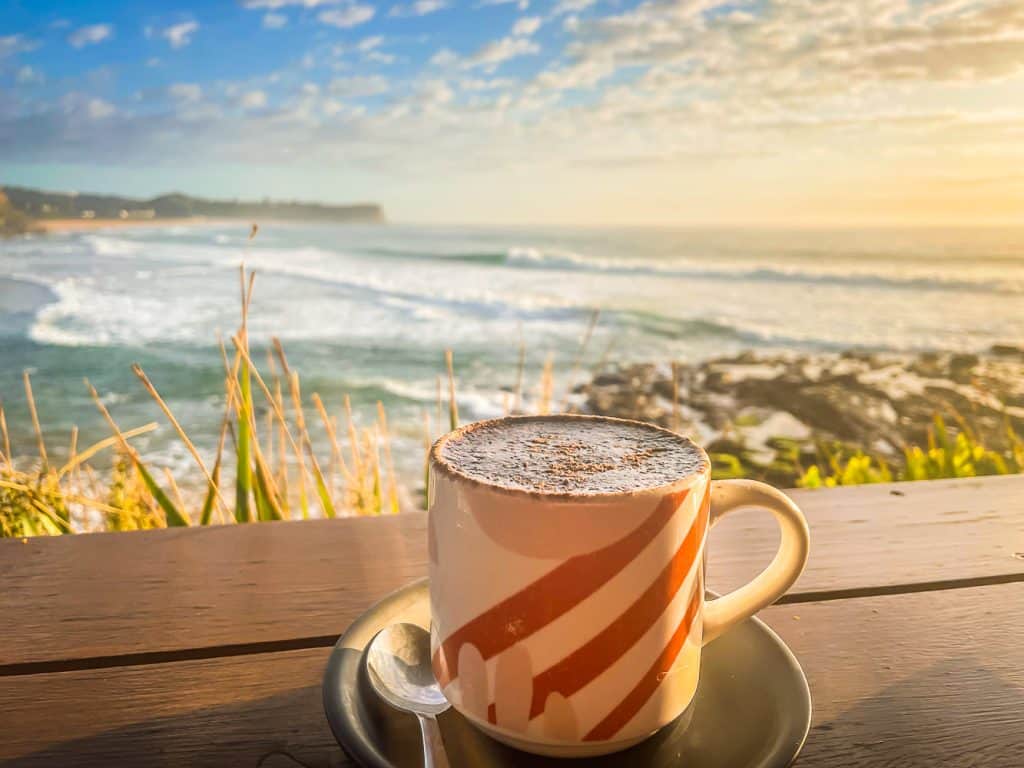
A typical mug of cappuccino in Australia | © Skye Gilkeson
15 Delicious Different Types of Espresso Drinks
While there really are different types of coffee drinks available from espresso-based drinks like complex types of iced coffee drinks from the big chains to the more delicate espresso flavours served up in an artisan coffee boutique.
This espresso drinks guide will help you decide which is the perfect coffee for you.
Espresso
What is espresso coffee? Espresso is essentially a single shot of coffee. While there are so many types of espresso coffee drinks, this is the simplest way of drinking coffee. It’s a single espresso shot served neat in a demitasse or petite espresso cup.
Also known as a short black, it is customary to stand at the bar while drinking your caffè normale in Italy. It is commonly also served with a glass of water for a quick sip before you keep moving into your morning.
Ristretto
For hardcore coffee aficionados, the Ristretto might be the best coffee to try on your next morning outing. A stronger and shorter version of espresso, the ristretto is poured using less water through a finer grind.
Long Black
The long black is probably the simplest type of espresso drink. It’s simply a shot of espresso poured into some additional hot water. The Americano is effectively the same as a long black – the water is simply added afterwards. You’ll order it as an Americano in Italy or Spain and un américain in France.
Lungo
One of the many types of Italian coffees, a Lungo is slightly different to both an espresso and a long black coffee.
Instead of adding hot water to the espresso or vice versa, the lungo (long in Italian) is a longer pour of espresso. So, all the water runs through the espresso in the machine. The result is a milder-tasting espresso flavour in a pour that is sized between an espresso and a long black.
The Lungo is called a cafe allonge in France.
Macchiato
Another of the shorter types of espresso coffee drinks, the macchiato is simply an espresso with a little milk foam on top. Macchiato means ‘marked’ in Italian. So, it’s just espresso and milk marking the top of the crema, served in a short demitasse glass.
One of the most popular Italian coffee styles in Australia, you’ll simply order a short or long ‘Mac’ at an Australian cafe.
Latte
Thanks to names like Starbucks, there are so many different types of lattes available, these days. However, the most common cafe latte is 2 shots of espresso with steamed milk poured over to fill the cup.
The milk used in a latte is slightly stiffer than that of a flat white.
Flat White
A flat white is also a single shot of espresso, topped off with about 2/3 foamed milk. It uses slightly less microfoam (flatter) than a latte and is a little shorter too.
Cappuccino
A cappuccino is made the same way as a latte. However, it is 1/3 microfoam, giving it that light, foamy consistency on top that is lightly dusted with chocolate.
Piccolo
A Piccolo latte is essentially a mini-me version of a latte. A Piccolo is an espresso shot topped with milk foam to the lip of a demitasse glass.
Affogato
Affogato (meaning ‘drowned’ in Italian) is the ultimate coffee lover’s dessert. A scoop of vanilla gelato is drowned in a shot of espresso. The delicious dessert is eaten with a spoon.
Read Next | Where to Find the Best Coffee in Bali

Felipe mid-pour at The Sensory Lab, Bondi Beach. | © Skye Gilkeson

Aeropress Coffee at The Sensory Lab. Image © Skye Gilkeson
The Third Wave Coffee Movement
If you’re a coffee purist who is into more fancy coffee drinks, you’ll no doubt have been riding the ‘Third Wave’, with gusto for a while.
If you’ve got no idea what I’m going on about, let me explain. The ‘First Wave’ was all about getting a good, quick cup of coffee.
It was followed by the ‘Second Wave’, when we saw the explosion of coffee franchises around the world, the likes of Starbucks. Coffee orders went from black or white with one, to a paragraph-long concoction served in a Grande cup.
The Third Wave began in the US back in 2002, but it’s really taking hold in the mainstream now. The movement is about dialling back to the true flavour of coffee with a carefully considered process of brewing the perfect cup.
It’s all about speciality coffee, bringing out the honest character of the beans and creating a cleaner, well-rounded flavour. It’s less about grab-n-go and more about appreciating the aromatic notes, like a good glass of wine.
There are so many different types of espresso drinks available these days it makes choosing your morning fix a little overwhelming. So here is a guide to the different types of espresso drinks of offer and what those trendy coffee names actually mean.
Pour Over
The setup for pour-over or filter coffee resembles something out of a science lab.
There’s the filter cone, paper, cup, and kettle. The pour-over process takes a number of steps to maintain the integrity of the beans and generally treat the coffee with care.
It takes a couple of minutes to pour; the coffee needs to be soaked.
It rests for a minute or so, then the water is poured gently over it (and yes, there’s a specific technique for that too).
So it’s not the one to order if you’re on the run, but it’s a great example of the sensory Third Wave experience, so if you’ve got the time, give it a go.
Aeropress
Throw out your plunger, the way of the future is the Aeropress . Well hang on, you may just want to go out for one – it’s a complete sensory experience.
For the Aeropress, you need scales, filters, a jug, really good quality coffee and the list goes on. As Felipe from Sydney’s The Sensory Lab explained, both the formula and the timing are important in an Aeropress technique. At the Sensory Lab they use 12g of coffee and 200 ml of water.
The coffee doesn’t have to be as coarse as an old-school plunger (french press), which you’ll notice when tasting the finished product (it is smoother and cleaner).
Two important steps in the process are when the water is poured onto the coffee, sparking what’s called the bloom. There’s a wait for about 45 seconds, the coffee is then stirred gently, the filter is placed on top and the press is inverted and pressed into the glass.
The result is a very clean, flavoursome coffee and the tasting experience was reminiscent of a wine tasting.
Turkish Coffee
While not part of the Third Wave, Turkish Coffee is definitely a speciality coffee that requires patience to prepare. Made in a traditional copper pot or cezve, the fine (often hand-ground) coffee powder is topped with water and boiled twice.
Traditionally, it is made over hot sand and Turkish coffee can often be made using additional spices like cardamom or cinnamon and is served with cubes of sugar and a glass of water to cleanse the palette.
Cold Drip Coffee
A shot of cold drip coffee is the latest in my arsenal of clean cooking ingredients. Why do I love it? It’s clean, it’s less acidic and bitter, and a really easy way of getting a caffeine kick without the spike and drop.
Cold drip coffee is true to the artisanal nature of the Third Wave movement with cold espresso drinks becoming increasingly popular on a hot summer’s day.
Let’s be honest, it’s a lengthy process akin to creating beautiful artwork. A cold drip is a great option for raw foodies. It’s not so much ‘brewed’ on heat but ‘washed’ over the beans.
Cold, filtered water is dripped through a lightly roasted coffee for 10 hours or more. You can expect a strong coffee with a subtle, sweet flavour.
One of the best espresso drinks for those on the go, I take it straight up, in a smoothie (recipe below), a raw chocolate mousse, or in a clean espresso martini.
Bulletproof Coffee
Bulletproof Coffee is a trend sparked by Dave Asprey, founder of The Bulletproof Executive. Asprey says he consulted a range of medical and sporting experts and spent more than $300,000 on self-experimentation.
A Bulletproof pour uses filtered water, specific “Upgraded” coffee (Asprey sells it), MCT oil * (medium-chain triglycerides) oil, and a couple of tablespoons of grass-fed butter.
As a meal replacement, it perhaps isn’t as nutrient-dense as it should be. It also contains about the same amount of fat as 12 egg yolks and 400 calories more than a normal latte.

Naughty but Nice: The Choc Coffee Shake is a great breakfast alternative. Image © Skye Gilkeson
Chocolate Coffee Shake
Espresso drinks recipes can range from a simple homemade iced coffee to a fancy espresso martini. But, my favourite to make at home is a simple Chocolate Coffee Protein Shake.
This is a great option for anyone looking for a morning pick-me-up.
This shake has a thick consistency and a beautiful, chocolate, coffee, and nutty flavour. It’s the perfect breakfast option or pre-workout smoothie before an afternoon session.
Ingredients
- 2T Bare Blends cacao protein powder (whey), Sunwarrior*
 or Paleo Pro* or grass-fed Gelatin*
 - Flesh and water from young coconut
- Shot of cold drip coffee
- 1t ABC butter (almond, brazil, cashew)
- Pinch organic cinnamon
- 1/2 cup crushed ice
 or
or  or grass-fed
 Now what?
- Blend, pour, and serve.
- Make enough for 2 shakes.

Skye is the founder and editor-in-chief of The Fit Traveller.
She is a journalist, writer, photographer, intrepid traveller and a former personal trainer with a passion for helping others reach optimal health.
As a TV journalist and producer, Skye has worked for household names such as 60 Minutes, Sunrise, TODAY and Nine News. She has also written for Women’s Health, Fodor’s Travel and Yahoo7 Travel, among many others.
Equally comfortable in a 5-star resort or hiking a far-off mountain, Skye loves the unexpected and enriching life experiences that each trip brings and can often be found in a backstreet chatting to locals with her camera in hand.
Skye is based in Sydney, working to master the balance between motherhood and her appetite for adventure.
Read more about Skye’s story here.